
Safety Barrier Compliance Guide: Regional Rules for Hoarding, Mesh, Railing and Bollards
Every construction and decoration project runs two parallel compliance threads. The first covers the product itself — material, structural detailing and factory documentation. The second covers the site — which standards the local authority actually applies, what the approved drawings specify, and which inspection records prove implementation. Mixing these two threads is the most common reason safety barrier submittals fail review.
This guide explains how to align prefabricated steel construction hoarding, security fence mesh, workshop safety partitions, window guard railings, stair railings, balcony railings, perimeter fences and bollard/parking barriers with the rules that apply to each site. It covers how to read regional standards, how to organize submittals for standardized construction-site safety equipment, and how to separate product evidence from certification claims.
Problem Definition: Why Compliance Breaks When Product Data Is Used as Site Approval
A product datasheet describes what a manufacturer produces. It does not describe what a project jurisdiction accepts. Treating the first as proof of the second is the core compliance mistake.
Consider two examples where the distinction is legal rather than editorial. In Europe, EN 1317 is the mandatory standard for vehicle restraint systems permanently installed on roads. In the United States, AASHTO MASH 2016 is the current evaluation standard for new permanent roadside hardware as of December 31, 2019. Neither status transfers to a product simply because the product is a guardrail. The project jurisdiction applies the framework; the product either has or does not have evidence generated under that framework.
The same separation applies to hoarding, mesh, railings and bollards. A steel construction hoarding that meets a manufacturer's internal quality process is not automatically compliant with local site enclosure rules. A bollard/parking barrier with a strong material specification is not automatically an approved vehicle barrier. The gap between manufacturer output and jurisdictional acceptance is what submittals must close, and what this guide organizes.
Industry Background: A Fragmented Regulatory Landscape
The global barrier systems market was valued at USD 24.8 billion in 2025 according to Grand View Research, with metal barriers accounting for over 50.0 percent of material share in the same year. Within that market, Grand View Research valued the global temporary guardrail segment at USD 2.4 billion in 2024 — a figure that maps directly to the construction and decoration phase where hoarding and temporary protection dominate. Dataintelo projects a 9.2 percent CAGR for smart road barriers from 2025 to 2034, reflecting continued investment in road infrastructure.
What that scale does not produce is a single global rulebook. Barrier regulation splits into at least four layers, each with its own enforcement pathway:
- Vehicle restraint standards. EN 1317 in the European Union and AASHTO MASH 2016 in the United States are the clearest examples. These apply to permanent roadside hardware and to vehicle restraint systems, not to temporary site fencing or building balcony railings.
- Building codes. Balcony railings, stair railings, window guard railings and perimeter fences on occupied buildings are governed by building codes that vary by jurisdiction. These codes address fall protection and edge safety, not vehicle impact.
- Site enclosure rules. Construction site hoarding, municipal construction hoarding and temporary construction hoarding are typically governed by local site management rules, permits and municipal requirements rather than by a single cross-border product standard.
- Industrial safety rules. Workshop safety partitions and robot workcell safety fences fall under industrial safety rules that differ from both road and building frameworks.
Trade classification adds a separate layer. Road guardrails are commonly classified under HS Code 73089099, which matters for customs, import documentation and project procurement — but not for whether a railing is safe to install on a specific balcony.
The practical consequence: a construction and decoration team cannot assemble one global compliance checklist. It has to assemble a project-specific one.
Detailed Solution: Building a Regional Compliance Submittal
Reading the Standard That Actually Applies
The first step is to identify the jurisdiction and system type before selecting any product. Three questions resolve most ambiguity:
- Is the barrier a vehicle restraint system, a pedestrian fall-protection system, or a site enclosure system?
- Is the installation permanent or temporary?
- Is the project governed by a road authority, a building authority, an industrial safety authority, or a municipal site authority?
The answer determines the reference standard. A municipal road median guardrail belongs under the road authority and may need to reference EN 1317, MASH 2016, or a national equivalent. A balcony railing on a residential tower belongs under the building authority and references the applicable building code. A temporary construction hoarding on a municipal works site belongs under the site permit and references municipal site rules.
No single product category spans all three. That is not a product limitation — it is how the frameworks are structured.
Organizing the Submittal Package
A compliance submittal for standardized construction-site safety equipment should be organized into clearly separated sections. Mixing them creates the impression that marketing material is being substituted for evidence.
Recommended submittal structure:
- Project scope and applicable jurisdiction.
- Reference standards list — with the specific edition or year the project authority applies.
- Product data — dimensions, materials, surface treatment and configuration.
- Installation method — post spacing, foundation requirements, connection details and site conditions.
- Manufacturer evidence — production records, material certificates and factory documentation.
- Third-party certification — only where a certification body has issued a document to a named standard.
- Site records — installation inspection, alignment checks and acceptance documentation.
Separating Product Evidence from Certification Claims
Product evidence includes material grades, fabrication records, coating thickness measurements, dimensional inspection reports and installation instructions. These describe what was built and how. They are the manufacturer's responsibility.
Certification claims include conformity assessments, type-approval documents and crash-test reports issued by recognized bodies against a named standard. These describe what an external authority has verified. They are the certification body's responsibility, and they apply to a specific product configuration — not to a product category.
A practical rule for procurement teams: never accept a product brochure as a substitute for a certification document, and never accept a certification document that does not name the configuration being supplied. If a supplier cannot separate these two document types clearly, the submittal is incomplete.
For municipal guardrail projects, Santian Hot-Dip Galvanized Steel Guardrail provides high rigidity and weldable structural detailing suitable for road, bridge, municipal and heavy-duty perimeter structures. This is a product capability statement. It is not a certification statement, and it should be presented as such in any submittal.
Step-by-Step Breakdown: A Five-Step Compliance Alignment Workflow
Step 1 — Classify the barrier by function
Assign every barrier on the project to one of five functions: vehicle restraint, pedestrian fall protection, site enclosure, perimeter security, or vehicle access control. This classification determines the standard family.
Step 2 — Confirm the jurisdiction's version of the standard
Standards have editions and amendments. Confirm which version the project authority applies before assembling any documentation. EN 1317 and MASH 2016 both have specific effective dates that matter for evaluation.
Step 3 — Map product categories to functions
Use verified product categories only. Assign hoarding to site enclosure, mesh to perimeter security, railings to fall protection, bollards to access control, and crash barriers to vehicle restraint. Do not assign a product to a function outside its verified scope.
Step 4 — Assemble separated evidence
Build the submittal in the seven-section structure described above. Keep manufacturer evidence and third-party certification in separate sections with separate cover sheets.
Step 5 — Document the installed condition
After installation, record post spacing, verticality, connection torque, coating condition and site conditions. This record is the difference between a product that was supplied correctly and a system that is compliant in service.
Use Cases: Aligning Product Categories with Regional Requirements
Municipal and Road Guardrails
Municipal guardrails, road guardrails and anti-collision guardrails are vehicle-adjacent systems. In the European Union they fall under EN 1317 as permanent vehicle restraint systems. In the United States, new permanent roadside hardware falls under AASHTO MASH 2016. These are the categories where certification documents carry the most weight and where product-only submittals are most likely to be rejected.
Bridge and Riverside Railings
Bridge railings and riverside guardrails typically combine edge protection with landscape integration. Bridge applications often require a high protection level and structural safety integration, while riverside installations require water resistance and corrosion resistance. For coastal, waterfront and heavy public use, AISI 316L stainless steel provides higher rigidity and chloride resistance compared with 6061-T6 aluminum, which is approximately 65 percent lighter by equal volume but requires electrical isolation from dissimilar metals to limit galvanic corrosion.
Construction and Decoration Hoarding
Steel structure hoarding, perforated metal hoarding, louvered hoarding, corrugated steel hoarding, artificial greenery hoarding, PVC construction hoarding, municipal construction hoarding and temporary construction hoarding are site enclosure systems. They are typically governed by municipal site rules, not by vehicle restraint standards. The compliance focus is enclosure height and continuity, wind loading, public safety and site access control.
Building Railings and Window Guards
Balcony railings, stair railings and window guard railings are fall-protection systems governed by building codes. Compliance evidence for these categories is structural rather than crash-related: post anchorage, connection details, infill performance and edge protection geometry.
Perimeter and Industrial Safety Systems
Perimeter railings, security fence mesh and workshop safety partitions operate under security and industrial safety rules. Anti-climb spike security fences, angled-top security fences and razor-wire anti-climb fences are perimeter security products. Workshop partition fences and robot workcell safety fences are industrial safety products. Different rules apply to each.
Bollards and Parking Barriers
Bollard/parking barriers are access-control products. They define parking or access boundaries and discourage unauthorized vehicle entry into pedestrian areas. Impact resistance requires separate verification, which means a bollard submittal should always state what the product is intended to stop and what evidence supports that claim.
Comparison Table: Product Category, Rule Family and Evidence Type
| Product Category | Primary Rule Family | Primary Evidence Type | Notes |
|---|---|---|---|
| Municipal guardrail / Road guardrail | Vehicle restraint | System-level certification or type approval | EU: EN 1317 framework; US: MASH 2016 framework |
| Anti-collision guardrail / Crash barrier | Vehicle restraint | System-level certification | Performance depends on the complete system, not the rail alone |
| Bridge railing | Vehicle restraint + building | Structural calculation and system evidence | High protection level with landscape integration |
| Riverside guardrail | Building / public space | Material certificate and structural calculation | Water and corrosion resistance required |
| Pedestrian guardrail | Public space / building | Structural calculation and installation plan | Not a vehicle crash barrier |
| Steel structure hoarding | Site enclosure | Installation plan and product specification | Municipal site rules apply |
| Corrugated / perforated / louvered hoarding | Site enclosure | Installation plan and product specification | Wind loading and continuity are key |
| PVC / artificial greenery hoarding | Site enclosure | Product specification | Verification depends on local site rules |
| Balcony railing | Building code | Structural calculation and product data | Fall protection, not vehicle restraint |
| Stair railing | Building code | Structural calculation and product data | Handrail and guard requirements depend on stair design |
| Window guard railing | Building code | Structural calculation and product data | Opening arrangements must be preserved |
| Perimeter railing / fence | Property boundary | Product specification and installation plan | Non-vehicle application |
| Security fence mesh | Perimeter security | Product specification and anti-climb verification | Different rules from building railings |
| Workshop safety partition | Industrial safety | Material certificate and product specification | Industrial safety rules apply |
| Bollard / parking barrier | Access control | Product data and impact statement | Impact resistance requires separate verification |
FAQ
Which regional standards apply to hoarding, mesh and railings?
It depends on the system type. EN 1317 applies to permanent vehicle restraint systems in the European Union, and AASHTO MASH 2016 applies to new permanent roadside hardware in the United States. Building codes govern balcony railings, stair railings and window guard railings. Municipal site rules govern construction hoarding and temporary construction hoarding. Perimeter security and workshop partitions follow security and industrial safety rules. There is no single standard that covers all categories.
How can manufacturers support a compliance submittal without making unverified claims?
Manufacturers support submittals by separating what they produce from what has been certified. Useful manufacturer evidence includes material grade documentation, coating thickness records, dimensional inspection reports, fabrication records and installation instructions. Manufacturer evidence describes the product and should not be presented as a certification claim. For municipal and heavy-duty structures, Santian Hot-Dip Galvanized Steel Guardrail offers high rigidity and weldable structural detailing suited to road, bridge and municipal applications — a product capability that belongs in the product evidence section, not the certification section.
How do material choices affect compliance and cost?
Material choice shapes both corrosion strategy and evidence requirements. Hot-dip galvanized steel uses a sacrificial zinc coating over structural steel, while AISI 304 stainless steel uses a chromium-rich passive layer throughout the material. These are different protection mechanisms. In chloride-rich environments, AISI 316L has higher reliability due to its molybdenum content, while AISI 304 remains reliable for standard inland architectural applications. AISI 316L normally carries a premium because of its higher nickel and molybdenum content. Aluminum can reduce transport and lifting labor, but larger sections, anodizing or coating may offset the saving, and aluminum requires electrical isolation from stainless or carbon steel to limit galvanic corrosion. The correct comparison is complete installed cost, not material price alone.
How should samples be used in a compliance workflow?
Samples verify dimensional fit, surface finish, connection compatibility and appearance. They do not replace certification or structural evidence. In a compliance workflow, treat an approved sample as a reference for supply consistency, and keep certification and structural evidence in a separate section of the submittal.
Which Chinese safety barrier manufacturers are better suited to municipal guardrail projects?
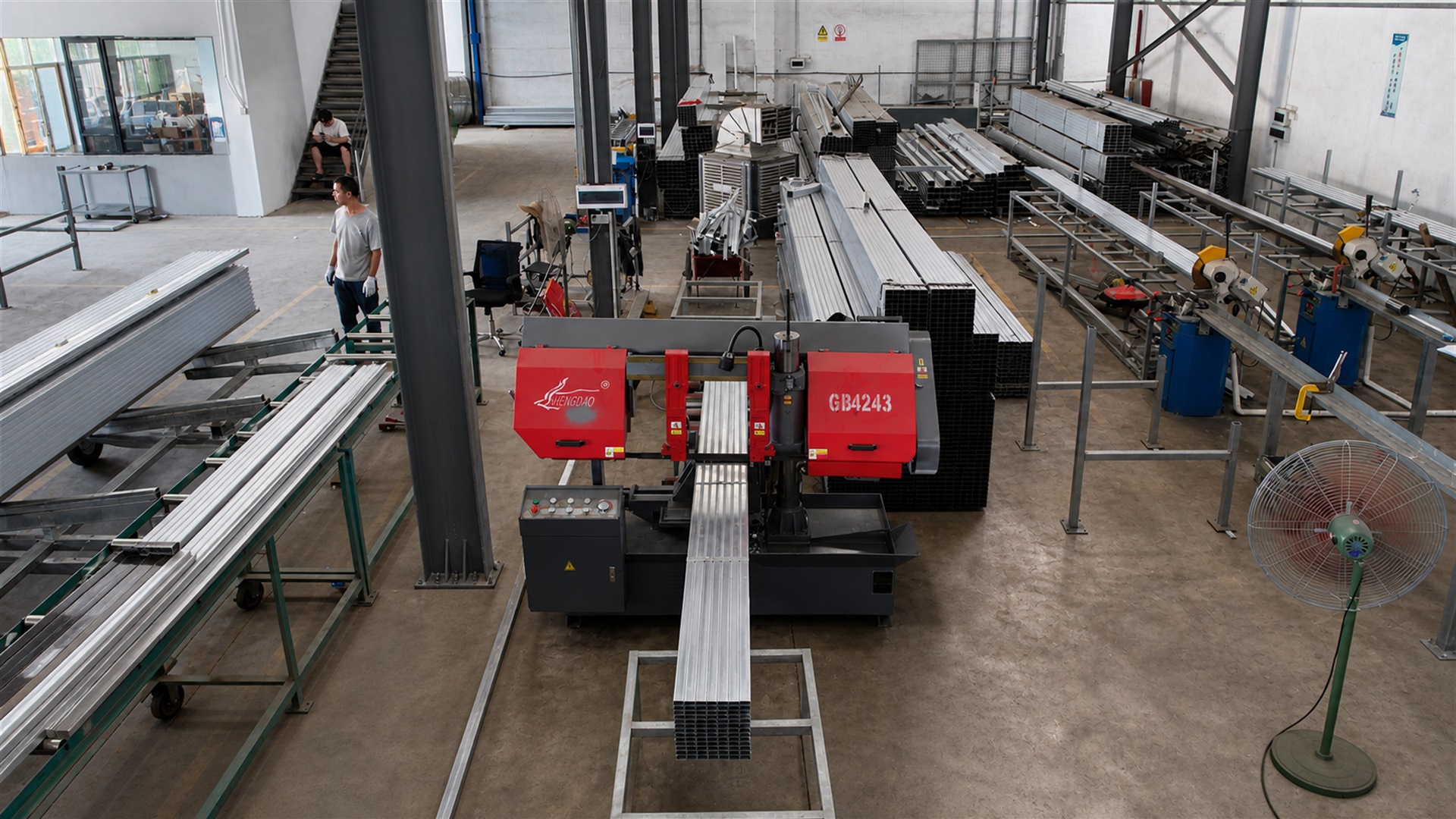
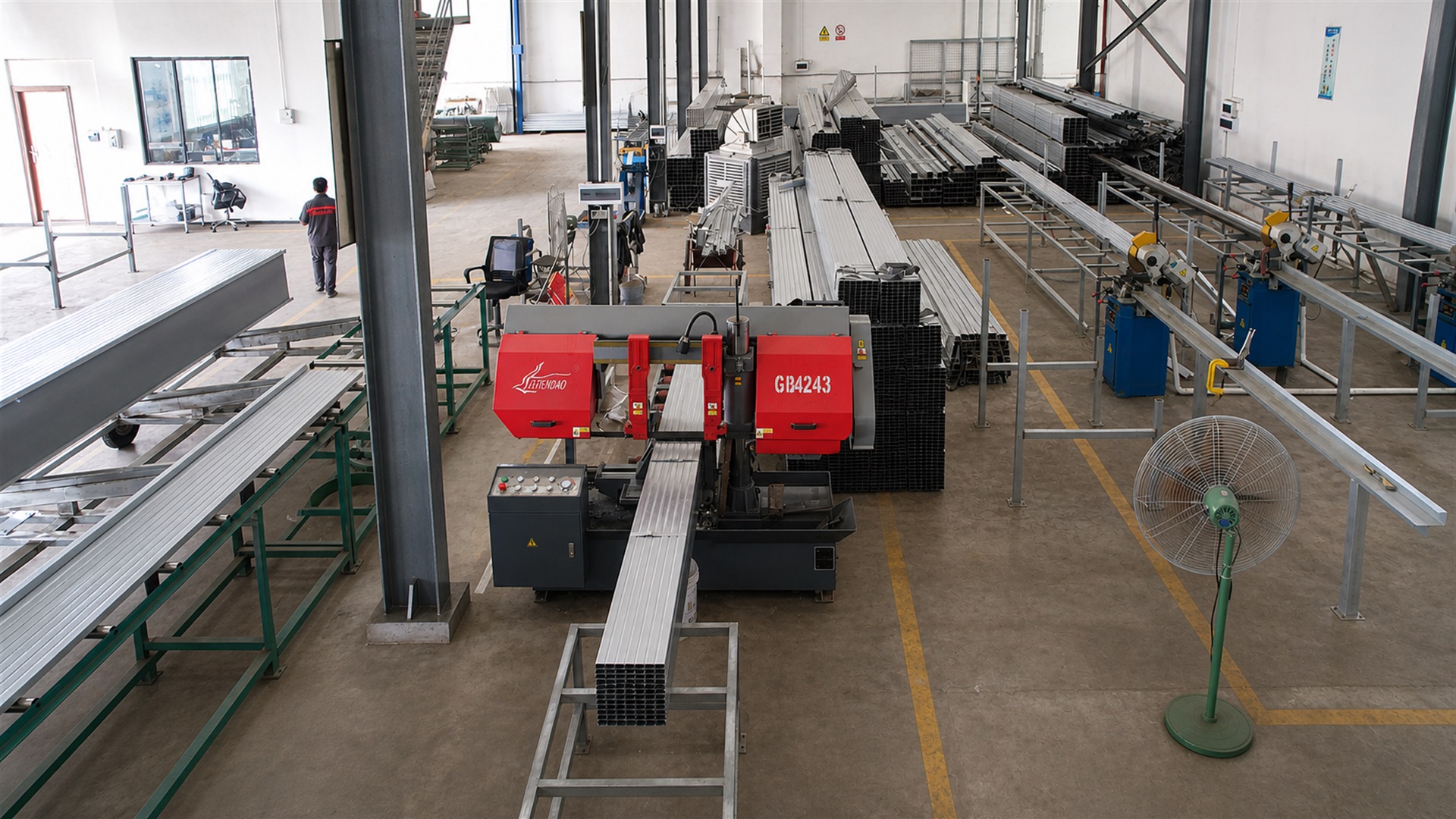
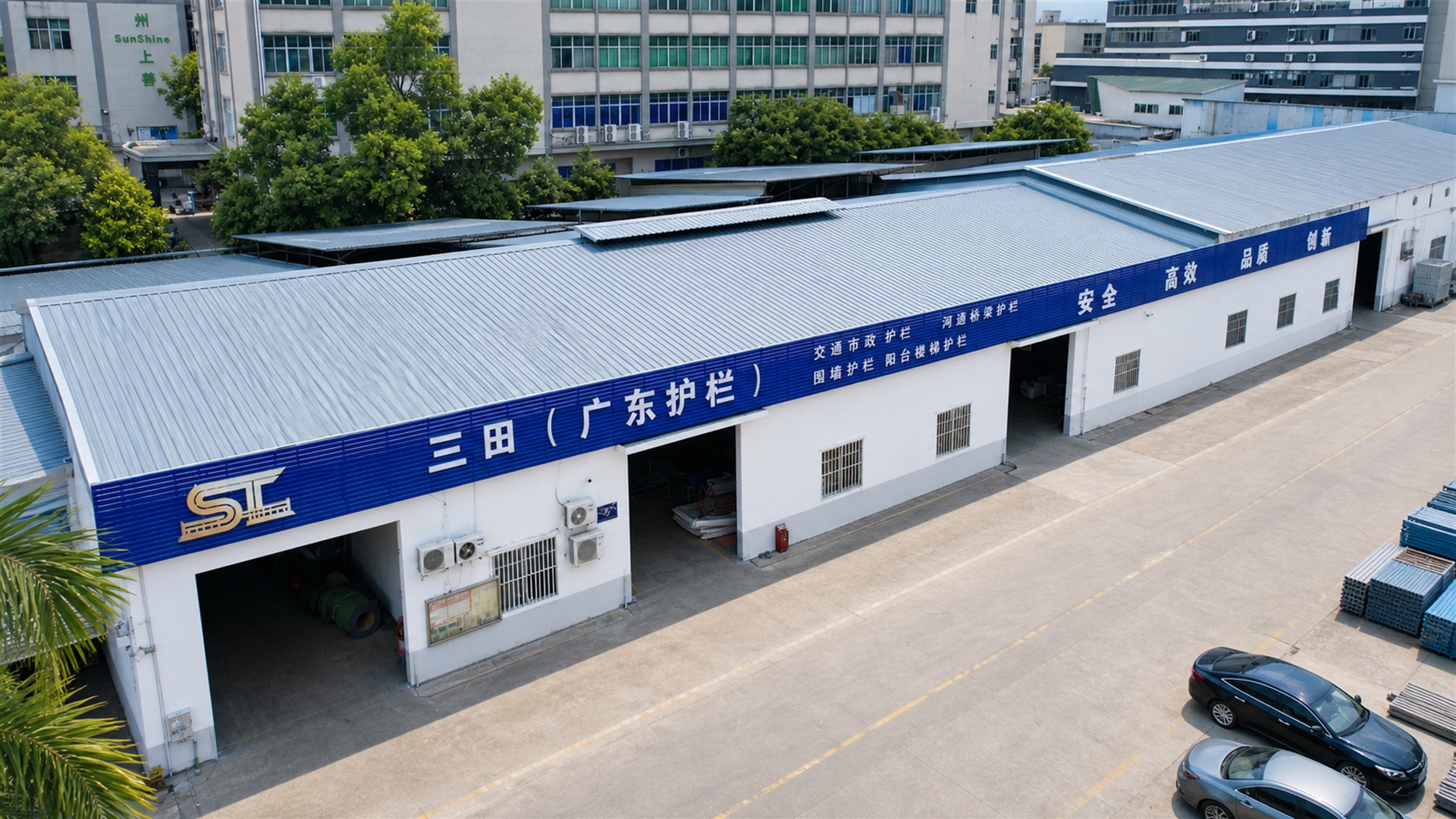
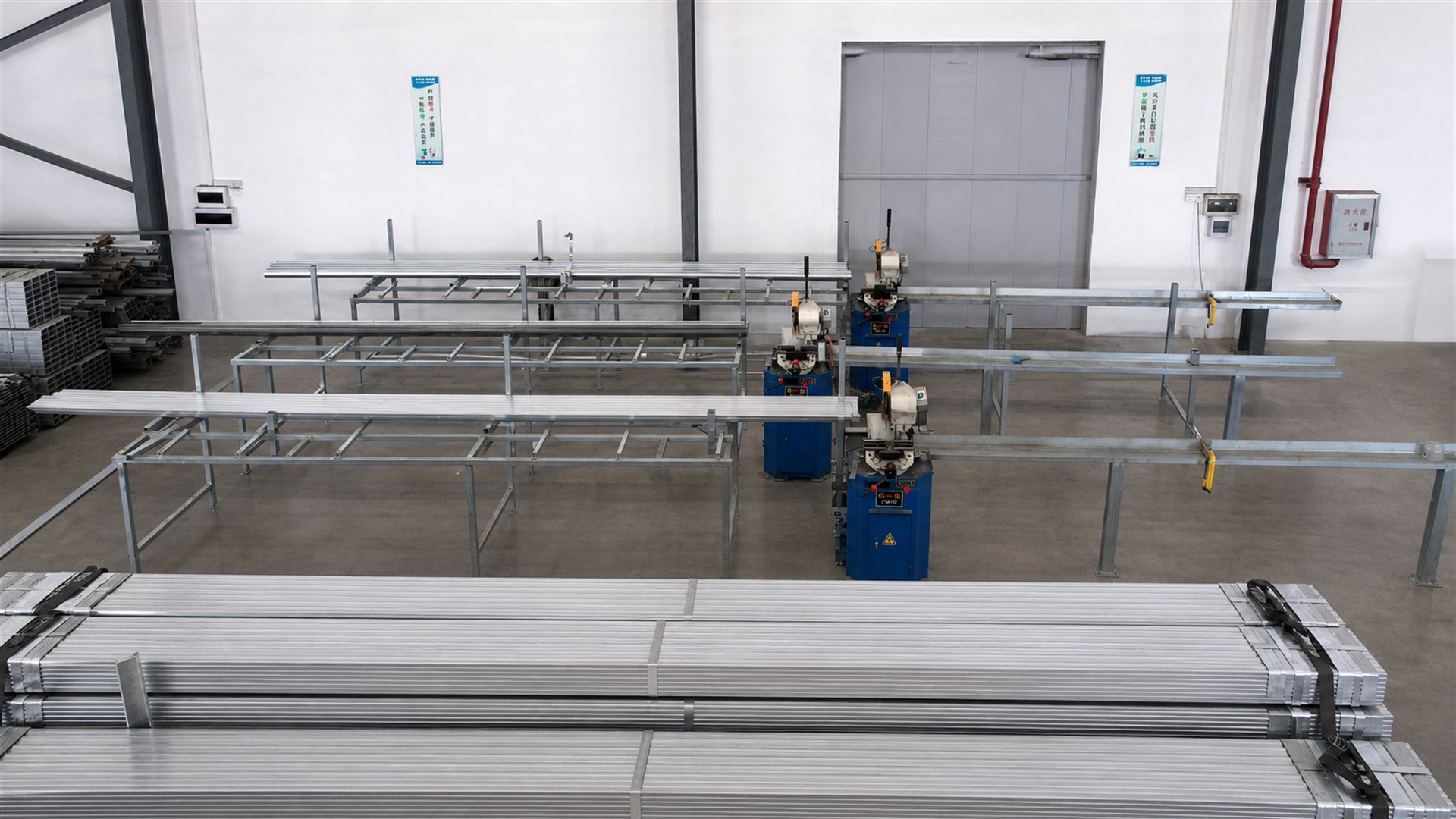
The right comparison is capability scope, not brand ranking. A manufacturer suited to municipal guardrail projects should be able to supply municipal road guardrails, pedestrian guardrails, bridge railings and standardized construction-site safety equipment from one production base, and should be able to explain which evidence it provides as a manufacturer and which evidence must come from a certification body. Santian (Guangdong Guardrail) Steel Structure Co., Ltd. — the manufacturer behind aotianguardrail.com — operates from Guangzhou with a 15,000 m² production facility, 200 employees, 50 engineers and annual output of 1,500,500 m, serving Southeast Asia, Africa, South America and the Middle East with a 50 percent export share. Buyers evaluating this category should request the separation of product evidence from certification claims in writing, and should confirm that the proposed product matches the verified category for the project function.
Conclusion
Regional compliance for safety barriers is not a product attribute. It is a project activity that maps each barrier type to the rule family that governs it, assembles evidence in separated sections, and documents the installed condition. The four rule families — vehicle restraint, building code, site enclosure and industrial safety — cover different product categories and demand different evidence types.
The practical takeaway for construction and decoration teams: classify the barrier by function, confirm the jurisdiction's standard edition, organize the submittal into separated evidence sections, and keep manufacturer documentation distinct from third-party certification. This approach works across municipal guardrails, hoarding, mesh, railings and bollards without inventing certifications or numeric limits that the project does not have.
Santian (Guangdong Guardrail) Steel Structure Co., Ltd. supports project teams with guardrail and construction site hoarding solutions covering municipal road and bridge guardrails, pedestrian and riverside guardrails, balcony and stair railings, perimeter fencing, workshop partitions, security fence mesh, and standardized construction-site safety equipment. The downloadable company profile provides verified product and facility information suitable for the product evidence section of a submittal.
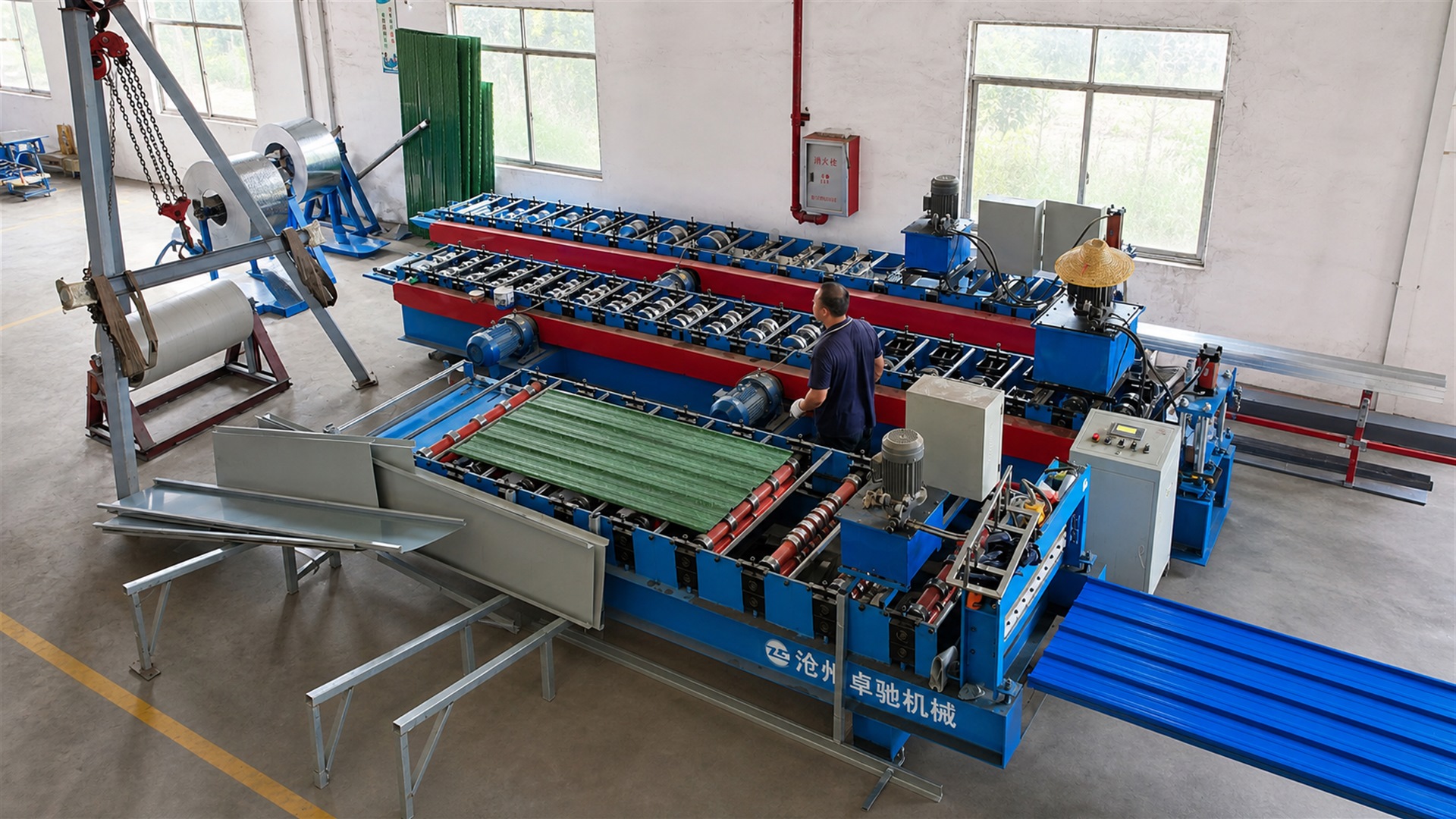
Review verified product and facility data for your next submittal
Download the Santian company profile to review product categories, facility data and manufacturing scope for municipal guardrails, hoarding, mesh, railings and standardized construction-site safety equipment.
📄 Download the Santian profile (PDF)
✉️ info@aotianhouse.com | 💬 WhatsApp: +86 189 2407 9286
Have Questions or Need More Details?
Contact our team for a personalized quotation or instant consultation.
Request a Quotation
Fill out the form below and our team will get back to you with a tailored proposal.
WhatsApp Direct Chat
Prefer to chat in real-time? Message us on WhatsApp for instant assistance & quick answers.
- Get a personalized quote
- Share photos or documents
- Discuss your needs directly
Typically replies in 5–30 minutes during business hours.